Table of Contents
Introduction
I still remember the moment Kunzum Pass came into view. My hands were numb inside my gloves, the sky had turned a violent shade of purple-orange, and there wasn’t a single bar of signal on my phone. Just 4,551 metres of silence, broken only by wind and the idle tick of a cooling engine. That’s Spiti. That’s exactly what you came for.
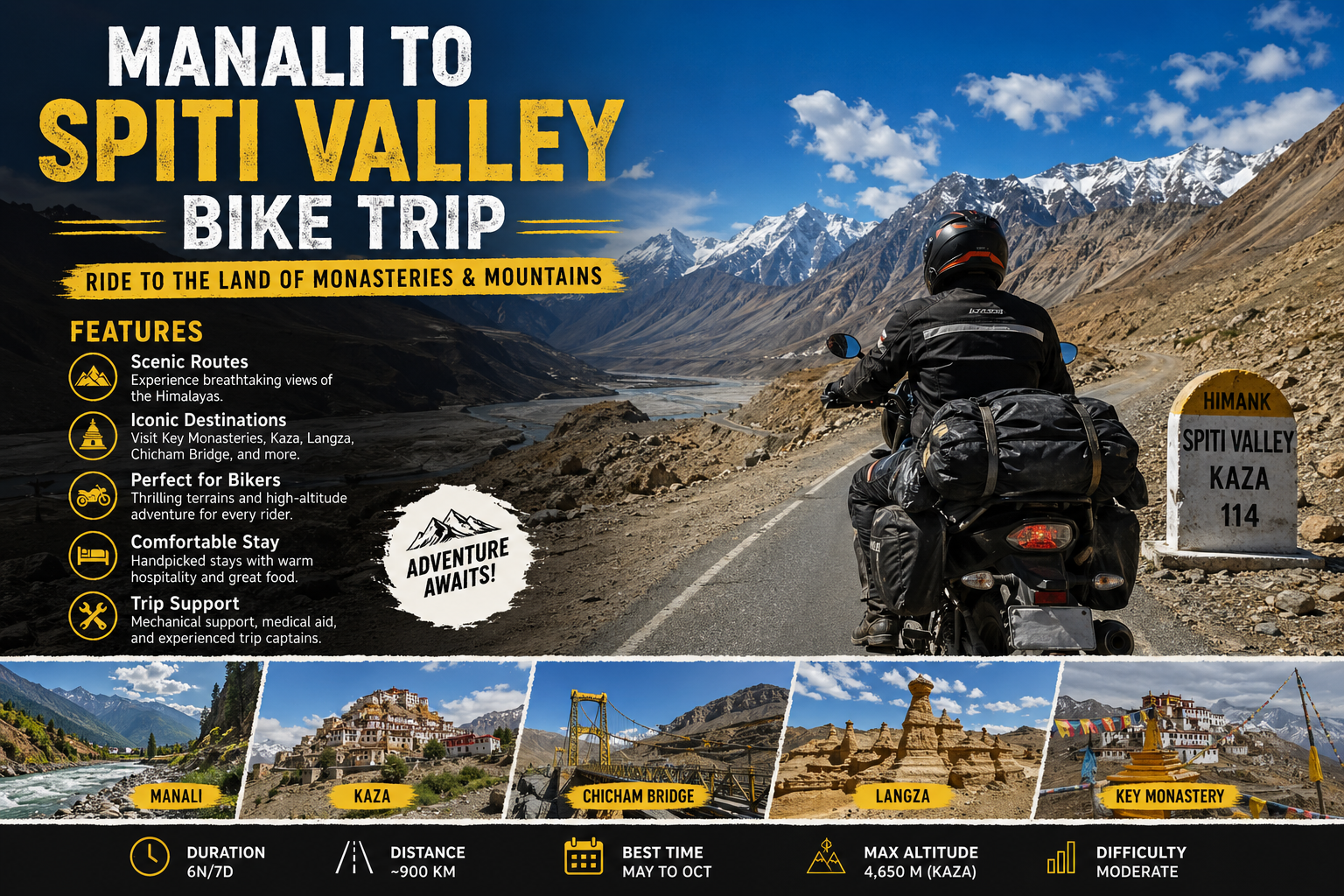
If you’re planning a Manali to Spiti Valley bike trip, this guide covers everything — the exact route, a day-by-day itinerary, which bike to ride, what to pack, permits, fuel stops, altitude sickness, budget, and more. Whether you’re a first-timer or a seasoned mountain rider, read this before you leave.
Why This Route Is Unlike Any Other Ride in India
Most riders who’ve done Leh-Ladakh will tell you Spiti is different. Quieter. Rawer. Less Instagrammed. The landscape shifts dramatically once you cross Kunzum Pass — barren brown mountains drop into a cold desert valley that feels closer to Tibet than to Himachal Pradesh. There are no hill-station crowds, no tourist buses playing Bollywood music, and no chai stalls every 5 km.
What you get instead: ancient monasteries perched on cliffs, villages where time genuinely seems to have stopped, the world’s highest post office (Hikkim, 4,440 m), and roads that will test your riding skills like nothing in the plains ever could.
Spiti is best suited for riders who are comfortable on loose gravel, don’t panic at river crossings, and can handle the mental weight of being completely off-grid. That said, it’s not reserved for experts. If you go prepared, even intermediate riders can complete this route safely and come back changed.
Best Time for the Manali–Spiti Bike Trip
The Manali route to Spiti Valley is seasonal. The road from Manali to Kaza via Rohtang Pass and Kunzum Pass is typically open only from June to October. After that, heavy snowfall closes both passes.
June is the earliest you can usually ride through. Rohtang may still have snow patches, and Kunzum Pass can be dicey in early June. But you’ll have thinner crowds and cooler temperatures. Expect day temperatures around 10–18°C and nights near 0°C.
July and August are peak season. Roads are fully open, the landscape turns surprisingly lush near Manali, and the weather is relatively stable. The downside: Rohtang Pass gets choked with tourist vehicles on weekends. Leave before 6 AM to beat the chaos.
September is the sweet spot. Tourist numbers drop, the sky turns a deep, unreal blue, and temperatures are still manageable — around 12–20°C in the day. This is when most experienced riders prefer to go.
October is the last window. Kunzum Pass usually closes by mid-to-late October. You’ll find near-empty roads and stunning autumn colours, but nights can drop to -5°C or below near the passes. Only go in October if you’re an experienced cold-weather rider.
November to May — the Manali route is shut. If you must visit in winter, the Shimla-Kinnaur route to Kaza stays accessible longer, though it has its own challenges.
Complete Route Map: Manali to Kaza (and Beyond)
The core route for a Manali to Spiti Valley bike trip is straightforward:
Manali → Rohtang Pass → Gramphu → Chhatru → Batal → Kunzum Pass → Losar → Kaza
Total distance: approximately 196 km. Allow 8–10 hours including breaks. Do not underestimate this — the stretch between Gramphu and Batal involves broken roads, river crossings, loose gravel, and narrow cliff-edges. It is not a highway. It is an adventure.
The Atal Tunnel option: Since the 9.02 km Atal Tunnel (Rohtang Tunnel) opened, many riders bypass Rohtang Pass entirely. The tunnel connects Manali to Sissu in Lahaul and cuts your travel time significantly, especially during bad weather. If you’re short on time or the weather looks sketchy, use the tunnel. If it’s your first time on this route and visibility is good, riding over Rohtang Pass is an experience worth having — just start early.
Extended circuit (recommended for 7–9 days): After Kaza, most serious riders extend into the broader Spiti region — Key Monastery, Kibber village, Hikkim post office, Langza (fossils and Buddha statue), Komik (Asia’s highest motorable village at 4,587 m), and finally Chandratal Lake before returning to Manali.
The other direction — Shimla entry: Many experienced riders suggest entering Spiti from Shimla and exiting via Manali. The Shimla side gives you a gradual altitude gain, which is better for acclimatisation. You pass through Kinnaur, Kalpa, Nako, Tabo, and Dhankar before arriving in Kaza. The full tribal circuit covers around 700–1,000 km. This approach is ideal for first-timers or anyone who wants to reduce altitude sickness risk.
Day-by-Day Itinerary
5-Day Fast Route (Experienced Riders)
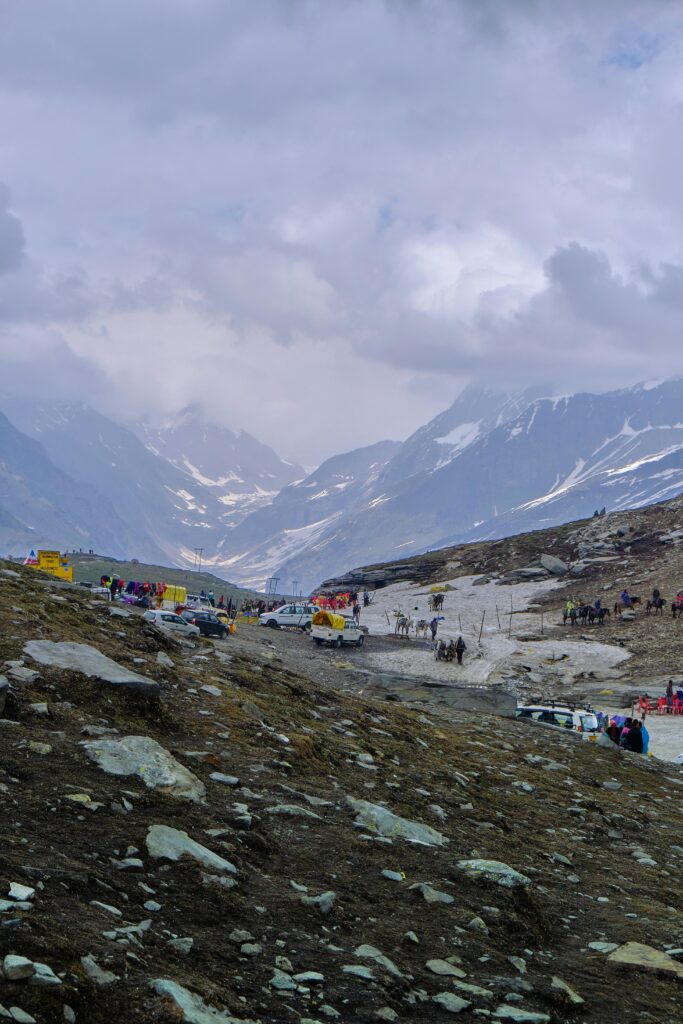
Day 1 — Manali to Batal (approx. 115 km, 6–8 hours) Start before 6 AM. Cross Rohtang Pass (or use Atal Tunnel) and continue through Gramphu, down to Chhatru, and along the Chandra River to Batal. The road from Gramphu to Batal is rough — river crossings, gravel, and narrow bends. Stay at Chacha Chachi Dhaba, a legendary roadside stop that has served weary Spiti riders for decades. It’s basic, it’s cold, and it’s unforgettable.
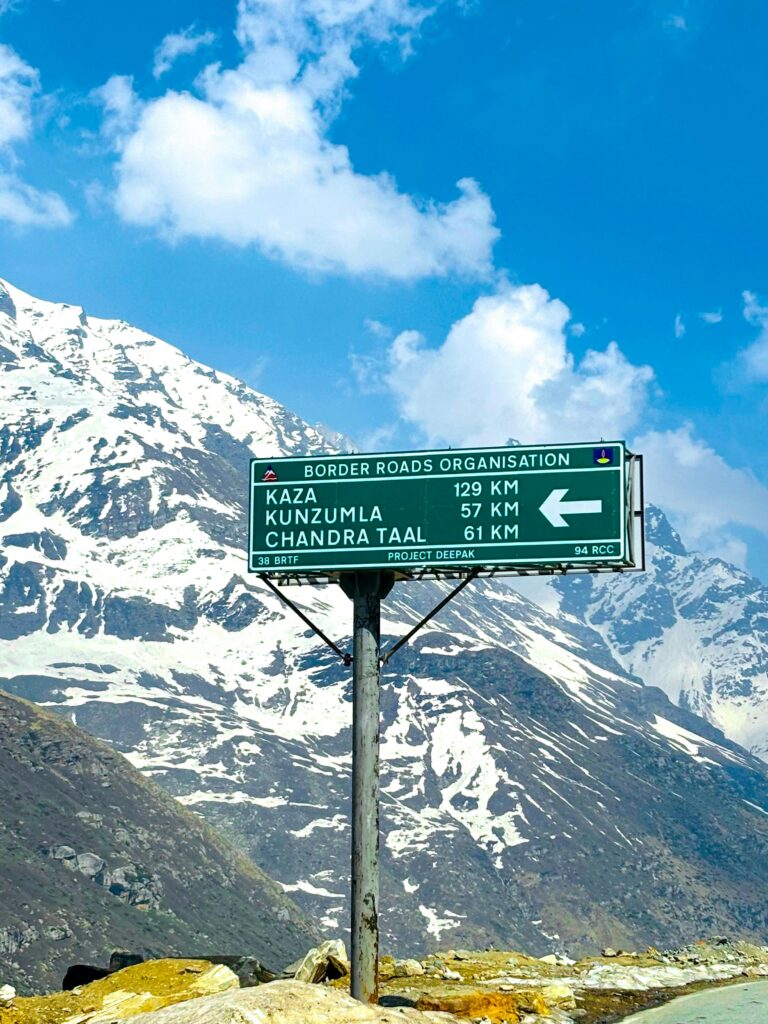
Day 2 — Batal to Kaza via Kunzum Pass (approx. 67 km, 3–4 hours) This is the crown jewel of the route. Climb to Kunzum Pass at 4,551 m — stop, breathe, take it in. Descend into Spiti and pass through Losar (grab chai, there’s nothing much else here). Arrive in Kaza by early afternoon. Check in, rest, and do not push yourself. Let your body adjust to the altitude.
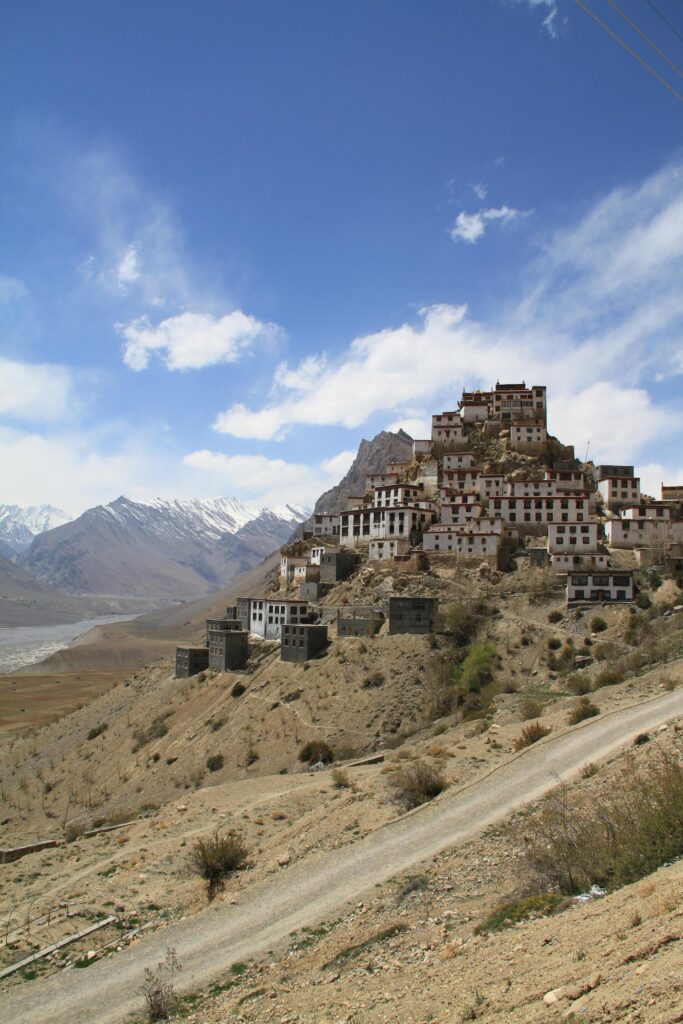
Day 3 — Kaza Acclimatisation + Local Sightseeing Don’t ride far today. Visit Key Monastery in the morning (stunning views, open to visitors). In the afternoon, take a short ride up to Kibber village and back. Drink water, eat light, sleep early. Altitude affects everyone differently — 3,800 m is not something to take lightly.
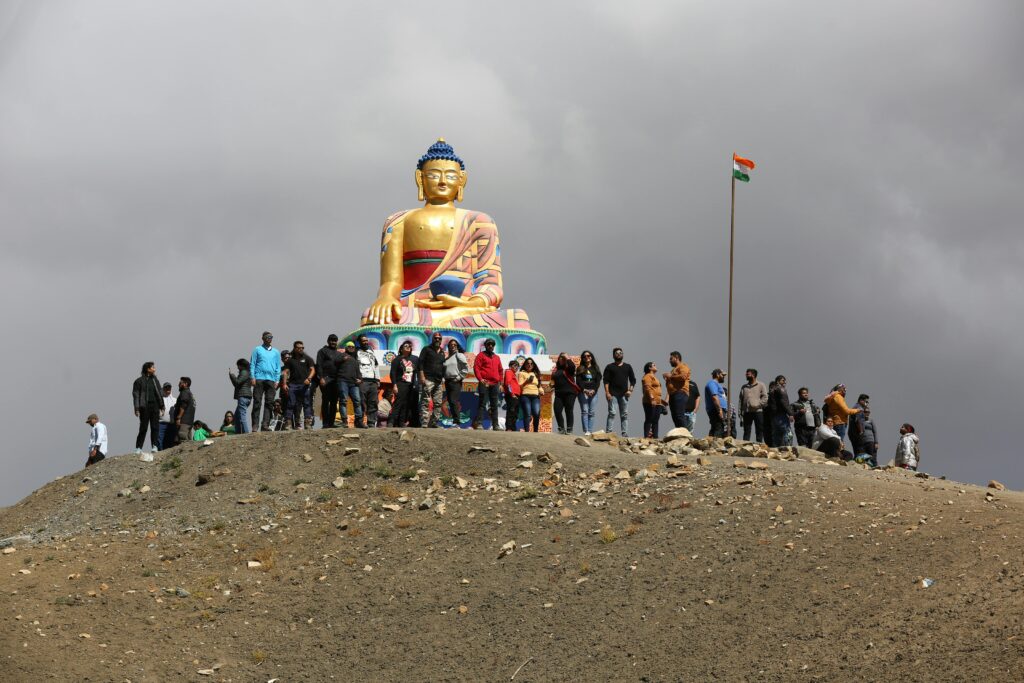
Day 4 — Kaza to Hikkim, Langza, Komik Ride the high-altitude village circuit. Post a letter from Hikkim — it’s the world’s highest post office and they’ll stamp it with a certificate. Head to Langza for the massive Buddha statue and fossil-hunting in the valley rocks (ammonites, marine fossils — this was once the bottom of the Tethys Sea). Continue to Komik at 4,587 m. Come back to Kaza for the night.
Day 5 — Kaza to Chandratal to Manali (approx. 130 km, 7–9 hours) Start early. Ride to Chandratal Lake (4,300 m) — the crescent-shaped lake is one of the most beautiful spots in the Indian Himalayas. You won’t want to leave. Then push through to Batal, climb back to Kunzum (or bypass via lower route), and return to Manali through the Atal Tunnel. Arrive tired, happy, and already planning your next trip.
9-Day Full Circuit (Recommended)
Day 1: Manali to Kullu/Jibhi Day 2: Jibhi to Sarahan via Jalori Pass Day 3: Sarahan to Sangla (Baspa Valley, Chitkul — last village on the Indo-Tibet border) Day 4: Sangla to Nako via Kalpa and Kamru Fort Day 5: Nako to Kaza via Tabo (1,000-year-old monastery) and Dhankar Days 6–7: Kaza sightseeing (Key, Kibber, Hikkim, Langza, Komik) Day 8: Kaza to Chandratal (camping under the stars) Day 9: Chandratal to Manali via Atal Tunnel
Which Bike Should You Ride?
The honest answer: any bike with good ground clearance and a reliable engine can do Spiti. But some bikes make it significantly easier.
Royal Enfield Himalayan is the most recommended bike for this route. Long-travel suspension, good ground clearance, fuel efficiency, and a large fuel tank (15 litres) make it well-suited for the broken roads of Spiti. The Scram 411 is a slightly lighter alternative.
Royal Enfield Classic 350 / Meteor can handle the route but will feel strained on steep, broken sections. Experienced riders have done it — but you’ll need to be careful and patient.
Avoid 150cc bikes. They’re technically capable of reaching Kaza via the Shimla route, but the Manali side — with river crossings, gravel, and steep climbs — is genuinely risky on an underpowered bike.
If you’re renting in Manali, expect to pay ₹1,500–₹2,500 per day. Book at least 2 weeks ahead in peak season (July–September). Most rental operators require a valid driving licence, a government ID, and a security deposit of ₹10,000. Confirm what’s included — helmet, toolkit, and basic spares should come with the bike.
Before you leave, check: tyre tread, brake pads, clutch cable, chain tension, engine oil level, fuel level, and battery. Carry a puncture repair kit, a spare clutch cable, a spark plug, and a small bottle of engine oil. You will not find a mechanic between Batal and Kaza.
Permits, Paperwork & Checkpoints
Indian nationals do not need a special permit to visit Spiti Valley. However, carry these documents at every checkpoint: Aadhaar card (or passport), driving licence, vehicle registration certificate (RC), insurance, and pollution under control certificate (PUC). If you’re on a rental bike, carry the rental agreement.
Foreign nationals require an Inner Line Permit (ILP) to enter certain restricted zones near the Indo-Tibetan border. You can obtain this from the District Magistrate’s office in Shimla, Reckong Peo (Kinnaur district), or Keylong (Lahaul). Apply at least a day or two before you plan to enter the restricted area.
Rohtang Pass permit: The National Green Tribunal (NGT) restricts the number of vehicles crossing Rohtang Pass daily. Apply online at the official Himachal Pradesh government portal (rohtangpermits.nic.in) at least a day in advance. The permit is free but limited. If you’re using the Atal Tunnel instead, you don’t need this permit.
Packing List for a Spiti Bike Trip
Keep it light. Everything on your bike adds to your fatigue and reduces handling precision on rough roads. Target 10–12 kg maximum.
Riding gear (non-negotiable): Full-face helmet, riding jacket with CE-rated armour (back, shoulder, elbow), riding gloves (thick enough for sub-5°C), knee guards, ankle-supporting riding boots.
Clothing: 2 thermal base layers, 1 down/puffer jacket, 1 windproof shell jacket, 1 rain suit (keeps you dry AND warm), 3 sets of quick-dry clothing, thick woollen socks, balaclava or neck gaiter.
Medical kit: Diamox 250mg (consult your doctor before taking — helps prevent altitude sickness), Dolo 650, ORS sachets, antacids, antiseptic cream, bandages, moleskin for blisters, SPF 50 sunscreen (altitude UV is brutal).
Tech and navigation: Power bank (20,000 mAh minimum), offline maps downloaded on Maps.me or Google Maps, headlamp with spare batteries, a dry bag or waterproof backpack cover.
Documents: Physical copies of everything — licence, RC, insurance, Aadhaar, rental agreement if applicable. Keep them in a waterproof zip pouch.
Cash: Carry at least ₹10,000–₹15,000 in cash. There are ATMs in Kaza but they sometimes run out. There are none between Batal and Kaza.
Altitude Sickness: The Rider’s Acclimatisation Guide
The Manali route to Spiti is one of the fastest altitude gain roads in India. You go from Manali at 2,050 m to Kunzum Pass at 4,551 m in roughly two days. Your body needs time to adjust — and on a bike, you don’t always notice the symptoms building until they’re serious.
Common AMS symptoms: Headache, nausea, loss of appetite, dizziness, difficulty sleeping, fatigue. These are normal in mild form and usually pass with rest and hydration.
Severe AMS symptoms (descend immediately): Confusion, inability to walk straight, coughing up frothy/pink mucus, severe breathlessness at rest. Do not wait. Do not sleep at altitude if you experience these. Descend at least 500 m and seek medical help.
Acclimatisation tips that actually work: Spend a rest day in Kaza before riding the high-altitude village circuit. Drink at least 3–4 litres of water daily. Avoid alcohol for the first 48 hours at altitude. Eat light, high-carb meals. Do not overexert on Day 1 in Kaza. If you want to take Diamox, consult a doctor before your trip — it works well as a preventive measure but is not a substitute for acclimatisation.
Where to Stay: Homestays, Camps & Guesthouses
Batal: No guesthouses. The iconic Chacha Chachi Dhaba is the only real option — they have basic beds, blankets, and hot dal for dinner. It’s cold, it’s cramped, and riders love it.
Kaza: The largest town in Spiti, with the most accommodation options. Expect to pay ₹800–₹2,500 per night depending on the type of room. Options range from basic dormitories to decent attached-bathroom guesthouses. Book ahead in July–August.
Chandratal Lake: No permanent structures are allowed near the lake due to environmental protection rules. Camps operate seasonally in the nearby meadow. Expect tents with shared facilities for ₹1,000–₹2,000 per person including meals. It’s worth every rupee to wake up here at dawn.
Village homestays (Kibber, Langza, Tabo, Dhankar): These are some of the best experiences on the route. Local families host travellers for ₹500–₹1,500 per night including home-cooked meals. The food is simple — dal, rice, thukpa, tsampa — and genuinely delicious after a long riding day.
Pro tip: Mobile network is virtually non-existent on most of this route. Do not rely on booking apps. Either book ahead through email before you leave, or show up and ask around. Villages are small — someone will help you find a room.
Must-Visit Attractions (Beyond the Obvious)
Key Monastery is the most photographed spot in Spiti, and for good reason — the whitewashed structure stacked against a 4,166 m hill is stunning. Visit early morning for the best light and fewer visitors. Remove your shoes inside, dress modestly, and ask before photographing monks or prayer halls.
Hikkim Post Office is the world’s highest post office at 4,440 m. Send a postcard home — they’ll stamp it with an official certificate. Getting there requires a short detour off the main road, fully worth it.
Langza village sits at 4,400 m and is known for two things: a giant Buddha statue overlooking the valley, and marine fossils embedded in the surrounding rocks. The entire valley was once a seabed. Pick up loose rocks and look carefully — ammonite fossils are common. Don’t remove anything from the site.
Komik village claims the title of Asia’s highest motorable village at 4,587 m. The road up is narrow and steep. The monastery at the top is small but peaceful. The views are obscene. Go.
Chandratal Lake — no description does it justice. The crescent-shaped lake at 4,300 m changes colour through the day, from deep turquoise to silver depending on cloud cover. The walk around the lake takes about an hour. Do it at sunrise before any other campers are awake.
Tabo Monastery is one of the oldest continuously operating monasteries in India, founded over 1,000 years ago. UNESCO has recommended it for World Heritage status. The murals inside are extraordinary. Plan at least 2 hours here.
Dhankar Monastery clings to a cliff above the confluence of the Spiti and Pin rivers. The old monastery is partially crumbling but deeply atmospheric. The new monastery nearby is well-maintained. The views from the top justify the short hike.
Fuel Stops, Mobile Network & Money
Fuel: The last reliable petrol pump before the Spiti Valley stretch is near Gramphu. After that, the next pump is in Kaza. The distance from Gramphu to Kaza is around 120 km on roads that drain your tank faster than normal due to altitude and low-gear riding. Carry 2–3 litres of extra fuel in a metal jerry can. Don’t assume the pump at Losar is always operational.
Mobile network: BSNL is the only network with any meaningful coverage inside Spiti Valley. If you use Jio, Airtel, or Vi, expect zero signal from Gramphu until you return to Manali. Before you leave, download offline maps, share your itinerary with someone who can track your check-ins, and buy a BSNL SIM or activate BSNL roaming if your current operator allows it.
Money: The only ATMs in the entire Spiti Valley are in Kaza, and they frequently run out of cash during peak season. Withdraw cash in Manali before you leave. Carry a minimum of ₹10,000–₹15,000. Accommodation, dhabas, and local shops are cash-only.
Budget Breakdown: How Much Does It Cost?
Budget solo rider (own bike, basic stays): Fuel for the full circuit: ₹3,000–₹5,000 Accommodation (6 nights): ₹4,000–₹7,000 Food: ₹2,000–₹3,500 Miscellaneous (permits, gear top-ups, emergencies): ₹2,000–₹3,000 Total: approximately ₹12,000–₹18,000
Rented bike trip: Bike rental (7 days × ₹1,800 avg): ₹12,600 Fuel: ₹4,000 Accommodation + food: ₹8,000–₹12,000 Security deposit (refundable): ₹10,000 Total: approximately ₹25,000–₹35,000 (excluding deposit refund)
Guided group tour: Organised packages start at ₹27,500 per person for a 9-day trip, typically including bike, helmet, safety gear, accommodation, breakfast and dinner, a road captain, and a mechanic on backup vehicle. Worth considering for first-timers who want safety support without the planning burden.
13. Safety Tips & Local Etiquette
River crossings: The stretch between Chhatru and Batal has multiple crossings. For shallow crossings (ankle-deep), keep your feet up and maintain momentum. For deeper ones — dismount, assess the flow and the bottom, and walk the bike across if in doubt. Do not rush a crossing. Watch how other vehicles do it first.
Riding solo: Solo riding in Spiti is increasingly common and generally safe during peak season (June–September). That said, always share your daily plan with someone — a friend, a hotel owner, or even a fellow rider you met in Manali. Check in at each major stop. Carry a basic satellite communicator if you’re going in shoulder season.
Monastery etiquette: Remove footwear before entering any monastery. Do not photograph monks without permission. Do not photograph the interiors of prayer halls unless explicitly allowed. Dress modestly — shorts and sleeveless tops are inappropriate inside religious spaces. Walk clockwise around stupas and prayer wheels.
Environmental responsibility: Spiti Valley’s ecosystem is fragile. Do not leave plastic behind — ever. Do not light campfires near Chandratal Lake (it’s prohibited and damaging to the terrain). Don’t drive off-road onto meadows. The valley’s beauty depends on riders treating it with respect.
FAQ: Questions Riders Actually Search
Is the Manali to Spiti route suitable for beginners? The Shimla route to Spiti is more appropriate for beginner riders — it’s a gradual altitude gain and the roads are more predictable. The Manali route is shorter but significantly more demanding, with river crossings, loose gravel, and no margin for error in certain sections. If you’re a beginner, either go via Shimla or travel with an experienced group using the Manali route.
Can a 150cc bike handle the Spiti route from Manali? Technically possible via the Shimla route. Via Manali, it’s not recommended. The steep climbs and poor roads between Gramphu and Kaza put excessive strain on small-displacement engines. A 350cc+ bike is the practical minimum for the Manali entry.
Is Kunzum Pass open in June 2026? Kunzum Pass typically opens in late May or early June, depending on snowfall. Check the Himachal Pradesh Road Transport website or call the Spiti administration office in Kaza before you leave. Conditions change year to year.
How many days is ideal for a Manali–Spiti trip? A minimum of 5 days for the core route (Manali–Kaza–Chandratal–Manali). Seven to nine days is the sweet spot if you want to explore Key, Kibber, Hikkim, Langza, Komik, and Chandratal without rushing. The 9-day tribal circuit via Shimla/Kinnaur is the complete experience.
Do Indian citizens need a permit for Spiti Valley? No special permit is needed for Indian nationals. Carry valid government ID, driving licence, RC, and vehicle insurance. Foreign nationals need an Inner Line Permit (ILP) for certain areas near the Indo-Tibet border.
Is it safe to do the Spiti bike trip solo? Yes, during peak season (June–September). The route is well-travelled, there are other riders around, and locals are helpful. Outside peak season, solo riding carries more risk. Always share your itinerary, carry cash, and have a backup plan.
Final Word
A Manali to Spiti Valley bike trip is not a vacation. It’s a recalibration. The roads will humble you. The landscape will silence you. The altitude will remind you that you’re a small thing moving through something enormous and indifferent. And then you’ll descend back to Manali through the Atal Tunnel, hit tarmac, and immediately start wondering when you can go back.
Go prepared. Respect the mountains. Respect the culture. Leave nothing behind except tyre tracks.
Plan Your Spiti Adventure with TravelsYatra
If this Manali to Spiti Valley bike trip has sparked your wanderlust, let TravelsYatra take care of the details while you focus on the experience. From well-planned itineraries and reliable bike rentals to comfortable stays and on-ground support, TravelsYatra ensures a smooth and memorable journey through the rugged हिमालय.
Whether you’re a solo rider or traveling with a group, their expertly curated packages are designed to give you the perfect balance of adventure, safety, and local exploration.
Start your Spiti journey today with TravelsYatra and turn your dream ride into reality!