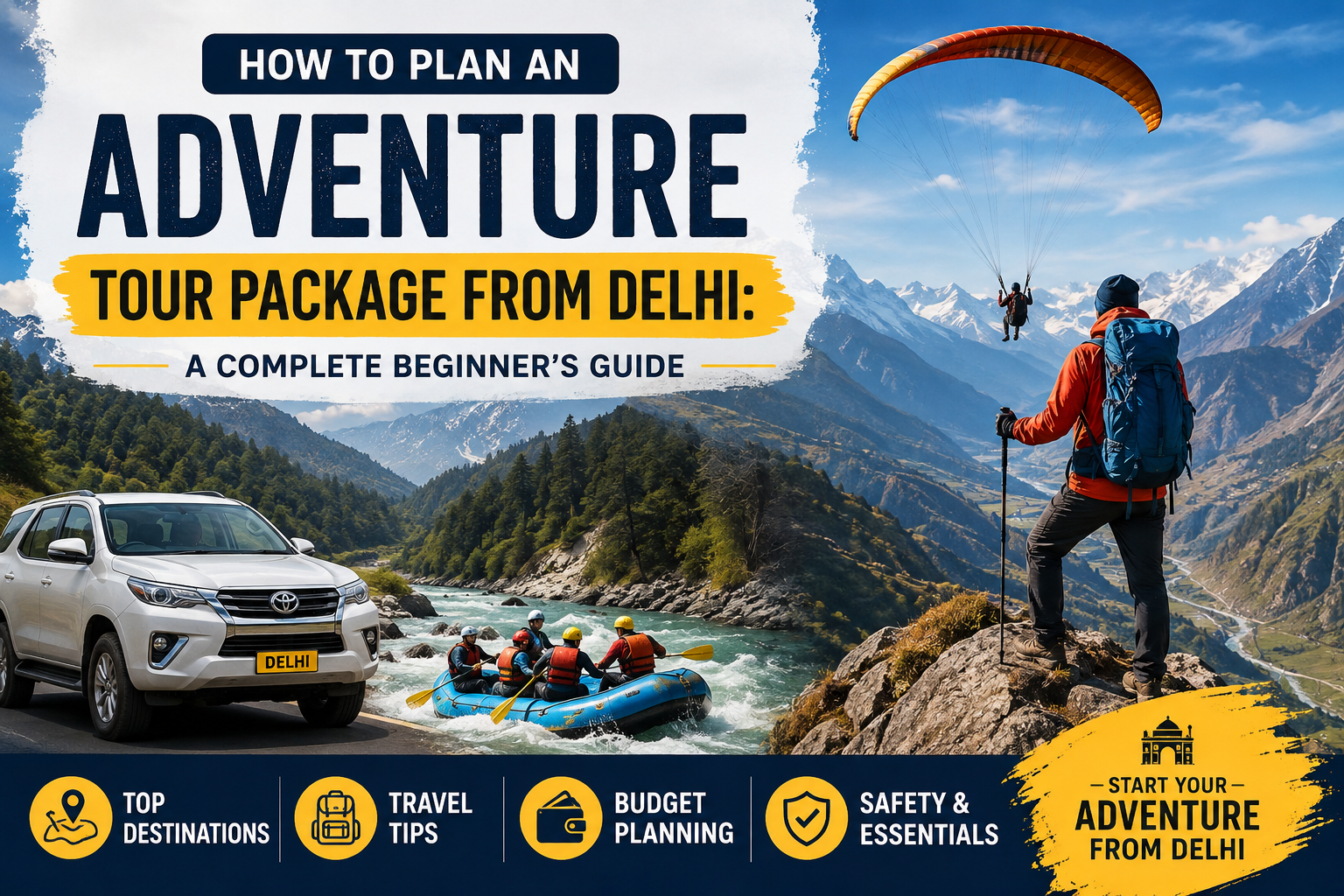
How to Plan an Adventure Tour Package from Delhi: A Complete Beginner’s Guide
Table of Contents
Delhi is more than the capital city of India. For thousands of adventure seekers, it is also the launch pad for some of the most thrilling trekking, camping, river rafting, and mountain expeditions in the country. Within a few hours of driving or a short flight, you can trade the city’s traffic and noise for snow capped peaks, pine forests, gushing rivers, and star filled night skies.
If you have ever searched for an adventure tour package from Delhi and felt overwhelmed by the choices, you are not alone. Between choosing a destination, picking the right season, comparing trekking difficulty levels, and figuring out what to pack, planning an adventure trip can feel like a full time job. This guide breaks the entire process down into simple, actionable steps so that even a first time adventure traveler can plan a safe and memorable trip.
By the end of this article, you will know how to choose the right destination, understand trekking package options, compare the pros and cons of booking a package versus planning independently, and get a clear checklist you can use before you book anything.
Why Delhi Is the Perfect Base for Adventure Tour Package from Delhi
Delhi’s location works in favor of adventure travelers in a way few other Indian cities can match. The Himalayan foothills of Uttarakhand and Himachal Pradesh are within a six to twelve hour drive. Ladakh, one of the most sought after high altitude destinations in the world, is a short flight away. Even the Aravalli hills near the National Capital Region offer weekend rock climbing and rappelling spots for those who cannot spare more than a day or two.
This proximity means you do not need to burn an entire vacation just getting to your adventure. A long weekend can turn into a proper trekking trip, and a week off work can take you deep into the Himalayas.
Delhi also has a mature travel industry built around this demand. There are experienced trekking operators, verified guides, established base camps, and gear rental shops that cater specifically to travelers heading out from the city. This ecosystem matters because adventure travel, unlike a regular sightseeing holiday, depends heavily on local knowledge of weather patterns, trail conditions, and safety protocols.
Step 1: Define What Kind of Adventure You Actually Want
The phrase adventure travel covers a wide range of activities, and the first planning mistake most beginners make is not narrowing this down early enough. Ask yourself what kind of experience you are looking for.
Trekking and hiking suit travelers who enjoy walking through changing landscapes and reaching a summit or viewpoint as a reward. River rafting and kayaking appeal to those who want a shorter adrenaline rush without multi day physical exertion. Camping and stargazing work well for people who want to slow down and disconnect rather than push their limits. Mountain biking, paragliding, rock climbing, and rappelling suit thrill seekers looking for short, high intensity bursts of activity.
Your answer to this question will shape almost every other decision, including your destination, the season you travel in, and how much you need to budget.
Step 2: Match Your Activity to the Right Destination
Once you know what kind of adventure you want, the next step is choosing where to go. Here are some of the most popular options for travelers heading out from Delhi.
Himachal Pradesh is a favorite for first time trekkers because of its well marked trails and range of difficulty levels. Places like Kasol, Tosh, and Triund offer short, moderately easy treks, while regions around Manali and Spiti cater to more experienced hikers.
Uttarakhand is known for a mix of adventure and spirituality. Trekkers can choose from routes like Valley of Flowers, Kedarkantha, and Har Ki Dun, while rafting enthusiasts head to Rishikesh, which is widely regarded as one of the best white water rafting destinations in the country.
Ladakh is the destination of choice for travelers seeking high altitude adventure, from the Chadar trek in winter to the Markha Valley trek in summer. Because of the altitude, Ladakh trips require more preparation and acclimatization time than most other options.
For those who want a shorter trip, the Aravalli range near Delhi and Gurgaon offers day treks, rappelling, and rock climbing without the need for overnight travel.
Step 3: Understand the Best Season for Your Chosen Activity
Timing can make or break an adventure trip. Trekking in Himachal and Uttarakhand is generally best between March and June, and again from September to November, when trails are clear of heavy snow and monsoon landslides. River rafting in Rishikesh runs strongest from September to June, with the monsoon months typically closed for safety reasons. Ladakh’s regular trekking season runs from June to September, though the Chadar trek is a winter only expedition that takes place when the Zanskar river freezes over.
Booking outside these windows is not impossible, but it usually means higher risk, unpredictable weather, and in some cases, closed routes. A good travel operator will always flag this before confirming your package.
Step 4: Decide Between a Packaged Tour and Independent Planning
This is often the biggest decision point for beginners, so it helps to weigh both options honestly.
Pros of Booking an Adventure Tour Package from Delhi
A package typically includes permits, a trained guide, camping or stay arrangements, meals, and safety equipment bundled together. This removes the guesswork of navigating permit offices, especially in regulated areas like Ladakh or certain forest reserves in Uttarakhand. Group packages also tend to be more affordable per person since costs like transport and guide fees are shared. For first time adventure travelers, having an experienced guide on unfamiliar terrain adds a real layer of safety, since local guides understand weather changes, altitude sickness symptoms, and emergency evacuation routes.
Cons of Booking an Adventure Tour Package from Delhi
Packages come with fixed itineraries, which means less flexibility if you want to spend extra time at one spot or skip another. Group sizes can sometimes be larger than solo travelers prefer, which may affect the pace of trekking. Package pricing can also feel higher upfront compared to piecing together your own transport and stay, even though it often works out cheaper once permits and gear rental are factored in.
Pros of Independent Planning
Independent trips give you full control over pace, route, and stops along the way. You can travel solo or with a small group of friends without adjusting to a larger group’s schedule. It can also be a rewarding way to build outdoor skills like navigation and campcraft.
Cons of Independent Planning
Independent planning requires more research time, and mistakes around permits, weather windows, or gear can turn dangerous quickly in high altitude or remote areas. Costs can also spike if something goes wrong and you need last minute local arrangements. For destinations with restricted zones, such as parts of Ladakh close to international borders, independent travel without a registered guide may not even be legally permitted.
Here is a simple comparison to help you decide.
Factor
Packaged Adventure Tour
Independent Trip
Permit handling
Done by operator
Traveler’s responsibility
Cost predictability
Fixed, upfront
Variable, can change
Flexibility
Limited by itinerary
High
Safety support
Trained guide included
Depends on traveler’s experience
Best suited for
Beginners, first time trekkers
Experienced outdoor travelers
Group size
Usually fixed group
Solo or custom group
Time needed to plan
Low
High
Step 5: Compare Popular Adventure Tour Package from Delhi
To make destination selection easier, here is a quick reference chart covering distance from Delhi, best season, and general difficulty level.
Destination
Approx Distance from Delhi
Best Season
Difficulty Level
Popular Activity
Triund, Himachal Pradesh
470 km
March to June, Sept to Nov
Easy
Weekend trekking
Rishikesh, Uttarakhand
240 km
Sept to June
Easy to Moderate
River rafting
Kedarkantha, Uttarakhand
400 km
Dec to April
Moderate
Winter trekking
Valley of Flowers, Uttarakhand
500 km
July to Sept
Moderate
Nature trekking
Spiti Valley, Himachal Pradesh
700 km
May to Oct
Moderate to Hard
Road trip and trekking
Markha Valley, Ladakh
1000+ km (fly to Leh)
June to Sept
Hard
High altitude trekking
Chadar Trek, Ladakh
1000+ km (fly to Leh)
Jan to Feb
Very Hard
Frozen river trekking
This kind of side by side view is especially useful for beginners who are still deciding between a relaxed weekend trip and a more demanding expedition.
Step 6: Budget for the Trip Realistically
Adventure tour packages from Delhi can range widely depending on destination, duration, and inclusions. A short weekend trek in Himachal might cost a fraction of a multi day Ladakh expedition once flights, permits, and specialized gear are factored in. When comparing packages, look closely at what is included. A cheaper package that excludes meals, gear rental, or transport to the base point can end up costing more once you add those expenses yourself.
It also helps to set aside a buffer for emergencies, altitude sickness medication, or an unplanned extra night if weather delays your return.
Step 7: Pack Smart for the Terrain
Packing for adventure travel is different from packing for a regular holiday. Layered clothing works better than heavy jackets alone, since temperatures can swing sharply between day and night in the mountains. A good pair of broken in trekking shoes is non negotiable, since new shoes often cause blisters on longer treks. Other essentials include a reliable backpack with rain cover, a reusable water bottle, a basic first aid kit, sunscreen, and a power bank, since charging points are rare on multi day treks.
If you are booking a package, check with the operator about what gear they provide, such as tents, sleeping bags, and trekking poles, so you are not carrying unnecessary weight.
Step 8: Prioritize Safety and Choose Experienced Operators
This is where experience and expertise genuinely matter. Adventure travel carries real risks, from altitude sickness to sudden weather changes, and the difference between a smooth trip and a dangerous one often comes down to the operator’s preparedness.
Before booking, check whether the operator provides trained guides certified by recognized mountaineering institutes, whether they carry basic medical kits and oxygen support for high altitude routes, and whether their itineraries include proper acclimatization days for treks above 3000 meters. Reading reviews from past travelers, especially ones who mention how the operator handled an emergency or a weather related change of plans, tells you far more than a polished brochure ever will.
A trustworthy travel partner will also be transparent about difficulty levels and will not oversell an easy trip to attract more bookings, since a mismatched difficulty level is one of the most common reasons trips go wrong for beginners.
This is exactly the kind of planning support TravelsYatra focuses on for travelers heading out from Delhi. Their team puts together adventure and trekking packages with experienced local guides, realistic itineraries, and clear information on permits and difficulty levels, so first time adventure travelers are not left guessing. If you are still deciding on a destination or want a package tailored to your fitness level and travel dates, exploring their adventure packages is a practical next step before you book anything.
Step 9: Build a Simple Pre Departure Checklist
Before you finalize your trip, run through this quick checklist. Confirm your permits and identification documents are sorted, especially for restricted areas like Ladakh’s border regions. Check the cancellation and refund policy of your package in case weather forces a change of plan. Inform a family member or friend of your detailed itinerary, including expected return dates. Carry printed and digital copies of your booking confirmation and emergency contacts. Get a basic fitness check done if you are attempting a moderate to hard trek, particularly if you have any pre-existing health conditions.
This last point matters more than most beginners realize. High altitude activity puts strain on the body in ways that are hard to predict, so a quick medical check before a demanding trek is a small step that adds real peace of mind.
Frequently Asked Questions
Is prior trekking experience necessary to book an adventure package from Delhi?
No. Many destinations near Delhi, such as Triund or short Rishikesh rafting trips, are designed for complete beginners. Just be honest with your operator about your fitness level so they can recommend a suitable difficulty level.
How far in advance should I book an adventure tour package?
For popular treks during peak season, booking four to six weeks ahead is a safe window, since permits and campsite slots can fill up quickly. For flexible weekend trips closer to Delhi, two weeks is often enough.
What is the biggest mistake first time adventure travelers make?
Underestimating altitude and overestimating fitness. Many beginners choose a trek that looks moderate on paper but underestimate how altitude affects breathing and stamina. Choosing a package with proper acclimatization days helps avoid this.
Can I customize a packaged Adventure Tour Package from Delhi?
Many operators, including smaller and mid sized agencies, are open to light customization such as adding extra days or adjusting group size, especially if you reach out directly instead of booking a fixed online package.
Final Thoughts
Planning an adventure tour package from Delhi does not need to be complicated once you break it down into clear steps. Start by identifying the type of adventure you want, match it to a suitable destination and season, decide whether a packaged tour or independent trip fits your experience level, and always prioritize safety over convenience or cost savings.
Delhi’s location gives you access to some of the most rewarding trekking and adventure destinations in India, from easy weekend trails in Himachal to demanding high altitude routes in Ladakh. With the right planning and a reliable travel partner, your first adventure trip can become the start of a lifelong habit rather than a one time experiment.
Gagan Panwar is a passionate travel blogger who enjoys creating insightful and engaging content across a variety of travel-related topics. I have 10 years of experience in writing travel related content . With a focus on clarity and value, he aims to deliver real, useful information to readers. When not writing, I like to travel to new destinations, explore new places, and draw on my experience in the content I write.