Table of Contents
Every season, travelers in Delhi look at the Himalayan Trekking Packages and wonder if a trek is really possible for them. The answer is yes. You do not need to be a professional athlete. You need a good plan, a reliable team and the right trek for your fitness level and your travel month.
This guide compares three of the most popular Himalayan treks that start from Delhi. Kedarkantha is the snow trek. Hampta Pass is the trek with dramatic changes of scenery. The Valley of Flowers is the trek for alpine blooms and calm forest trails. You will find costs in rupees, best months, day by day plans, pros and cons, and a simple checklist for choosing a trekking package you can trust.
I have kept the language simple and the facts practical, so you can decide quickly and book with confidence. All prices in this guide are indicative. They change with the season, the group size and the services you choose.
Quick Comparison: Which Trek Fits You?
Start here if you are short on time. The table shows the key differences between the three treks.
| Trek | Max altitude | Duration (Delhi to Delhi) | Difficulty | Best season | Indicative price (INR) |
| Kedarkantha | About 12,500 ft | 7 days | Easy to moderate | December to April | 8,500 to 18,000 |
| Hampta Pass | About 14,000 ft | 7 days | Moderate | June to September | 10,500 to 22,000 |
| Valley of Flowers | About 11,500 ft in the valley (Hemkund Sahib about 14,200 ft) | 7 to 8 days | Easy to moderate | July to mid September | 11,000 to 23,000 |
- Pick Kedarkantha if this is your first trek or you want snow.
- Pick Hampta Pass if you want variety, a high pass crossing and a bigger challenge.
- Pick the Valley of Flowers if you love nature, photography and a gentler climb.
How This Guide Was Prepared
Good trek advice should come from people who work on these trails. This guide is based on how we plan and run Himalayan departures from Delhi, on conversations with local trek guides and camp teams in Sankri, Manali and Ghangaria, and on official information from the Uttarakhand Forest Department, Himachal Tourism and UNESCO. I have also compared current package prices across the market so the ranges here are realistic.
Reviewed by Gagan Panwar. Facts about altitude, seasons and permits can change. Always confirm the latest trail status and entry rules with your trek operator before you pay.
How to Choose the Right Himalayan Trek
Many first-time trekkers pick a trek because of a photo. A better method is to match the trek to your situation. Ask yourself these four questions.
- What is my fitness level? If you can walk briskly for an hour without stopping, Kedarkantha or the Valley of Flowers is a safe start. Hampta Pass needs stronger legs and better stamina.
- When can I travel? Kedarkantha works in winter and early spring. Hampta Pass and the Valley of Flowers work in summer and the monsoon months. Your calendar often decides the trek for you.
- How many leave days do I have? Plan for 7 days for each trek, door to door from Delhi. Add one extra day for buffer in case of rain or road delays.
- What do I want to see? Snow and summit views, a high mountain pass, or a valley full of wildflowers. Each trek gives a very different experience.
A simple rule helps here. If you are unsure between two treks, pick the easier one. A trek you finish comfortably gives you confidence for a harder one next year. A trek that pushes you too far can spoil the whole trip.
Kedarkantha Trek Package from Delhi
Overview
Kedarkantha is one of the most popular winter treks in India, and the reasons are easy to understand. The trail starts at Sankri village in the Uttarkashi district of Uttarakhand. It passes through pine and oak forest and frozen meadows, and it ends on a summit of about 12,500 feet. From the top, you see a wide ring of peaks including Swargarohini, Bandarpoonch and Black Peak.
The climb is steady rather than steep. That makes Kedarkantha a favorite for beginners, college groups and friends who want a first taste of snow trekking.
Best time to go
December to April. From December to February you get deep snow and very cold nights. In March and April the weather is milder, the skies are often clearer and the snow is softer underfoot.
Sample 7 day itinerary from Delhi
| Day | Plan |
| Day 1 | Overnight journey from Delhi to Dehradun by train or bus. |
| Day 2 | Drive from Dehradun to Sankri (about 9 to 10 hours). Check in, meet the guide and get a safety briefing. |
| Day 3 | Trek from Sankri to Juda ka Talab (about 4 km). Camp near the frozen lake. |
| Day 4 | Trek from Juda ka Talab to Kedarkantha Base (about 4 km). Rest early. |
| Day 5 | Start before sunrise for the summit. Return to base, then descend to Hargaon camp. |
| Day 6 | Trek down from Hargaon to Sankri, then rest and relax. |
| Day 7 | Drive back to Dehradun and take the overnight journey to Delhi. |
Kedarkantha trek cost
A basic Kedarkantha package from Delhi usually costs around INR 8,500 to INR 10,000 per person. A standard package with better stays and food is around INR 12,500. A premium package with private transport and extra comforts can reach INR 18,000. Prices rise in peak winter weeks and around New Year.
Group size also matters. A larger group often brings the per person cost down, while small private departures cost more.
One practical tip for Kedarkantha: rent or carry good snow-grip footwear and waterproof gloves. Many first-time trekkers underestimate how wet the trail becomes after fresh snow, and cold, wet feet are the most common complaint on this route.
Pros and cons
| Pros | Cons |
| Best choice for beginners | Very cold nights in peak winter |
| Snow from December to March | Crowded campsites around New Year |
| Beautiful forest and meadow trail | Road journey to Sankri is long |
| Short, easy to plan trek window | Snow conditions vary each year |
Hampta Pass Trek Package from Delhi
Overview
Hampta Pass is a crossover trek. You start in the green, forested Kullu valley near Manali and cross the pass at about 14,000 feet into the dry, wind-swept Lahaul side. The change in scenery in a single day is the reason people call it one of the most rewarding treks in Himachal Pradesh.
The trail runs past rivers, meadows and glacier views. It is more demanding than Kedarkantha, but it is still a well-known route for fit first-timers who prepare properly.
Best time to go
Mid June to September. The Manali side can get rain in July and August, so trails may be slippery. Many trekkers prefer late June, early July and September for the clearest skies. Some packages add a side trip to Chandratal Lake, which adds a day.
Sample 7 day itinerary from Delhi
| Day | Plan |
| Day 1 | Overnight bus from Delhi to Manali (about 12 to 14 hours). |
| Day 2 | Rest in Manali to adjust to the altitude. Drive to Jobra and trek to Jwara. |
| Day 3 | Trek from Jwara to Balu ka Ghera through meadows and river crossings. |
| Day 4 | Cross Hampta Pass and descend to Shea Goru. This is the longest day. |
| Day 5 | Trek from Shea Goru to Chatru, then drive to Manali. |
| Day 6 | Rest or explore Manali, then take the overnight bus to Delhi. |
| Day 7 | Arrive in Delhi in the morning. |
Hampta Pass trek cost
Budget packages start near INR 10,500 per person. Standard packages are around INR 15,000, and premium packages can reach INR 22,000. The price changes with transport type, camp quality and whether the Chandratal side trip is added.
A note for Hampta Pass: the pass crossing day is long, often 8 to 9 hours. Start early, carry snacks and keep your pace even. Trekkers who rush the first hours often struggle near the top.
Pros and cons
| Pros | Cons |
| Dramatic change of scenery in one trek | Long, tiring pass crossing day |
| Great mix of meadow, river and pass views | Rain can make trails slippery |
| Strong sense of achievement | Needs good fitness preparation |
| Good option for fit beginners | Weather changes quickly at altitude |
Valley of Flowers Trek Package from Delhi
Overview
The Valley of Flowers in Uttarakhand is part of a UNESCO World Heritage site, together with Nanda Devi National Park. In the monsoon season the valley fills with wildflowers, and the trail feels more like a garden walk than a hard climb.
The trek starts at Govindghat. A well-marked path of about 13 km leads to Ghangaria, which is the base for the valley. Visitors enter the valley during the day only, and overnight stays inside are not allowed. Many packages also offer a day trip to Hemkund Sahib, which sits at around 14,200 feet.
Best time to go
July to mid September, with peak bloom usually in late July and August. The valley is closed in winter due to snow.
Sample 7 day itinerary from Delhi
| Day | Plan |
| Day 1 | Drive or travel from Delhi to Haridwar or Rishikesh. Overnight stay. |
| Day 2 | Drive to Joshimath or Govindghat (about 9 to 10 hours). |
| Day 3 | Trek from Govindghat to Ghangaria (about 13 km). |
| Day 4 | Explore the Valley of Flowers and return to Ghangaria by afternoon. |
| Day 5 | Optional Hemkund Sahib visit, or rest. Trek down to Govindghat. |
| Day 6 | Drive to Haridwar or Rishikesh. |
| Day 7 | Return to Delhi. |
Valley of Flowers trek cost
Expect around INR 11,000 per person for a budget package, INR 16,000 for a standard package and INR 23,000 for a premium package. Hemkund Sahib add-ons and private vehicles increase the price.
For the Valley of Flowers, start the valley walk early in the morning. The light is better for photos, the trail is quieter and you will have enough time to return to Ghangaria before the entry window closes. Carry a rain jacket even on sunny mornings, because mountain weather can turn within an hour.
Monsoon note: Landslides can block roads in July and August. Choose an operator that offers flexible dates and a clear plan for delays.
Pros and cons
| Pros | Cons |
| Stunning flowers and mountain views | Short bloom season |
| Gentler climb than most Himalayan treks | Landslide and rain risk |
| Good for nature and photography fans | Ghangaria can be crowded in peak weeks |
| Rich cultural stop at Hemkund Sahib | Valley entry hours are limited |
Price Comparison and Cost Breakdown
The table below shows what you can expect to pay per person from Delhi. Use it as a starting point and always ask for a written quote.
| Trek | Budget (INR) | Standard (INR) | Premium (INR) | What changes between tiers |
| Kedarkantha | 8,500 | 12,500 | 18,000 | Stay type, food quality, private transport |
| Hampta Pass | 10,500 | 15,000 | 22,000 | Camp quality, Chandratal add-on, vehicle |
| Valley of Flowers | 11,000 | 16,000 | 23,000 | Hotel stays, Hemkund add-on, private cab |
What affects the final price
Four things move the price more than anything else. The first is the season, because peak weeks cost more. The second is transport, since a shared bus is cheaper than a private tempo traveller. The third is the stay, where tents and basic guesthouses cost less than hotels and better camps. The fourth is group size, because fixed costs like the guide and the cook are shared across more people. When you compare quotes, compare these four points first.
The chart below shows the same numbers in a visual form, so you can see how the tiers compare across all three treks.
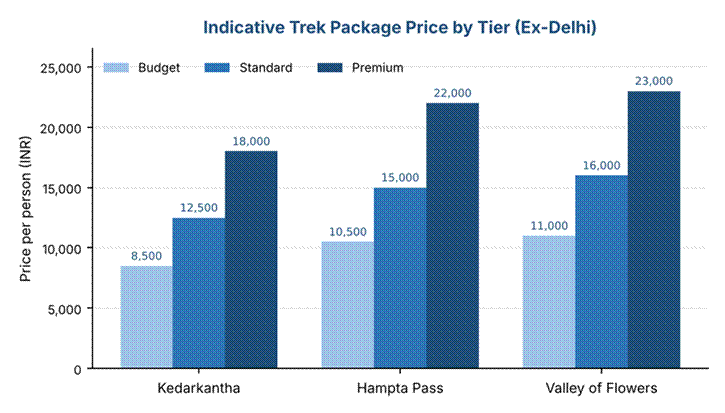
Figure 1: Indicative price per person by package tier. Rates vary by season and group size.
The takeaway is simple. Kedarkantha is the most affordable at every tier. Hampta Pass and the Valley of Flowers cost more because of longer transport and, in some cases, higher camp and stay costs.
What a Good Trekking Package Should Include
Two packages with the same trek name can be very different. Check the inclusions line by line before you compare prices.
Usually included
- Forest permits and entry fees
- Certified trek leader and local guides
- Tents or homestays, sleeping bags and mats
- Meals during the trek, usually breakfast, lunch, tea and dinner
- First aid kit and an oxygen cylinder
- Transport from the base point, and from Delhi in full packages
Often excluded
- Personal gear such as shoes, jackets and rucksacks
- Porter or mule charges for personal bags
- Travel insurance
- Meals during travel days
- Anything caused by weather delays or road closures
Questions to ask before you pay
- How many trekkers will be in my group, and how many guides will be with us?
- Is the trek leader trained in first aid and altitude safety?
- What happens if the trek is stopped by weather or a road closure?
- Are permits, forest fees and camping charges included in the price?
Red flags to avoid
- A price far lower than every other quote
- No safety briefing or emergency plan
- No clear cancellation and refund policy
- A leader with no first aid or altitude training
- Vague answers about permits and group size
Safety, Fitness and Altitude Tips
Altitude is the biggest risk on a Himalayan trek. Hampta Pass and Hemkund Sahib both go above 14,000 feet, and Kedarkantha goes above 12,000 feet. Small habits make a big difference.
- Walk slowly and steadily. Pace matters more than speed.
- Drink plenty of water. Aim for 3 to 4 liters a day.
- Respect the acclimatization day. Do not skip rest days to save time.
- Know the warning signs. Headache, nausea, dizziness and unusual tiredness need attention. Tell your guide at once. If symptoms worsen, descend.
- Talk to a doctor first if you have heart, lung or blood pressure concerns, or if you take regular medicines.
A simple four week fitness plan
Walk, jog or cycle for 30 to 45 minutes, four days a week. Add stair climbing and squats twice a week. By the end of week four, you should be able to cover about 5 km in roughly 40 minutes without feeling exhausted.
Packing essentials
- Trekking shoes with good grip and ankle support
- Three layers: thermal inner, fleece and a waterproof outer jacket
- Cap, gloves and woolen socks for cold treks
- Sunscreen and UV sunglasses
- A 2 liter water bottle and a personal medicine kit
- A 40 to 50 liter rucksack, or an offloading bag if your package allows it
Leave behind plastic and litter, and follow the guide’s instructions on campsites. Healthy mountains depend on respectful trekkers.
Why Book a Trek Package from Delhi with TravelsYatra
If you want a Delhi-based team that handles planning, permits, transport and support in one place, you can explore our current departures at https://travelsyatra.com/. We keep our pricing clear, our groups small and our safety standards high.
- Transparent pricing with a written list of inclusions and exclusions
- Delhi departures with pick-up and drop options
- Experienced local guides and trained trek leaders
- Group customization for friends, colleges and offices
- Support before and during your trip
Our goal is simple. We want you to come back from the mountains safe, happy and already planning your next trek.
How to Book in 5 Simple Steps
- Choose your trek based on your season and fitness.
- Confirm your dates and group size.
- Ask for a written quote with a clear list of inclusions.
- Pay the advance to confirm your spot.
- Receive your itinerary, packing checklist and safety briefing.
Frequently Asked Questions
What is the Kedarkantha trek cost from Delhi?
Most packages cost between INR 8,500 and INR 18,000 per person, depending on the season, transport and the quality of stay. Peak winter and New Year dates cost more.
Which is the best trekking package from Delhi for beginners?
Kedarkantha is the most popular choice for beginners because the climb is steady and the trail is well supported. The Valley of Flowers is another gentle option in summer.
When is the best time for Hampta Pass and the Valley of Flowers?
Hampta Pass is best from mid June to September. The Valley of Flowers is best from July to mid September, with peak bloom in late July and August.
How many days do I need from Delhi for each trek?
Plan for about 7 days for each trek, door to door. Keep one extra day free in case of weather or road delays.
Are meals, permits and stays included in the package?
Good packages include permits, a guide, camping or homestay, and meals on the trail. Always confirm this in writing, along with what is excluded.
Is the Valley of Flowers trek safe during the monsoon?
It is a popular season, but rain and landslides are real risks. Choose an operator with flexible dates and a clear plan for delays, and check the latest road status before you travel.
Can women or solo travelers join group departures?
Yes. Many trekkers join group departures alone. Ask about group size, the guide team and the stay arrangements before you book.
What is the cancellation and refund policy for trek packages?
It differs by operator. Ask for the policy in writing, including what happens if the trek is cancelled due to weather or government restrictions.
Final Thoughts: Which Trek Should You Book?
There is no single best Himalayan trek. There is only the best trek for you. Choose Kedarkantha for snow and an easy start. Choose Hampta Pass for adventure and variety. Choose the Valley of Flowers for color, calm and photography.
Whatever you pick, prepare well, travel with a trusted team and respect the mountains. The Himalayas will reward you for it.
Ready to go? Book Trek Package